

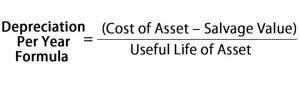
This understanding is crucial for exploring related topics such as depreciation methods, capital gains taxes, and asset lifecycle management. These concepts are interconnected and essential for a comprehensive grasp of financial planning and analysis. Salvage value is subtracted from an asset’s purchase cost to determine the after tax salvage formula total amount that can be depreciated over its useful life.
- The choice of method depends on the nature of the asset and its expected pattern of use and obsolescence.
- These are the sum-of-years digits, straight-line, units of production, double-declining balance, and declining balance.
- Conversely, if there is high demand for a particular type of asset, the salvage value may increase.
- The estimated salvage value is deducted from the cost of the asset to determine the total amount that is depreciable on an asset.
- Failing to account for depreciation recapture can lead to an overestimation of the net proceeds from asset disposal and, consequently, inaccurate financial projections.
Step 4: Adjust for Disposal Costs
Assume an investor deposits $100,000 in a bank account for 10 years with annual interest of 16% and will take the $100,000 in the end of 10th year. Calculate Before-Tax Cash Flow and After-Tax Cash Flow in this investment considering the income tax of 25%. Thus far, we’ve discussed net capital spending in terms of tracking the trend in capital expenditures and depreciation in analyzing a company’s current (and future) growth profile. However, a company with disproportionate capital expenditures relative to its competitors is not necessarily a positive sign. In fact, the company might be trailing behind the rest of the industry in terms of growth and thus attempting to catch up by spending significant capital on purchasing fixed assets.
- Your personal data will be used to support your experience throughout this website, to manage access to your account, and for other purposes described in our privacy policy.
- Again, the depreciation which was provided during the effective life of the machinery (in terms of money) actually revolves within the working capital of the company.
- A higher residual value generally results in lower regular payments because the lessee is expected to pay for the asset’s usage minus its estimated remaining worth.
- This value plays a crucial role in financial decision-making as it affects various aspects such as depreciation, asset disposal, and capital budgeting.
- The matching principle is an accrual accounting concept that requires a company to recognize expense in the same period as the related revenues are earned.
- But generally, salvage value is important because it’s the value a company puts on the books for that thing after it’s fully depreciated.
Practical examples of salvage value calculation

By closely aligning costs with productivity, businesses can maintain financial precision and fairness in reporting. Salvage Value Salvage values on equipment used within the project are normally seen as a cash flow into the business at the end of the project. The salvage value can be used to calculate the annual depreciation amount using the straight-line method.
What is Terminal Cash Flow?
- The Proctor & Gamble machinery example is a great illustration of how to calculate salvage value.
- To democratize these opportunities, Yieldstreet has opened a number of carefully curated alternative investment strategies to all investors.
- Online calculators are a convenient and versatile tool for performing complex mathematical calculations without the need for physical calculators or specialized software.
- In order to help you advance your career, CFI has compiled many resources to assist you along the path.
- By understanding and properly calculating salvage value, businesses can make better decisions when purchasing, using, and eventually disposing of their assets.
- Therefore, the DDB method would record depreciation expenses at (20% × 2) or 40% of the remaining depreciable amount per year.
The carrying value of the asset is then reduced by depreciation each year during the useful life assumption. The salvage value is considered the resale price of an asset at the end of its useful life. NRV is also used to account for costs when two products are produced together in a joint costing system until the products reach a split-off point. In accounting and tax, salvage value is used to calculate the total depreciation expense over the asset’s useful life.
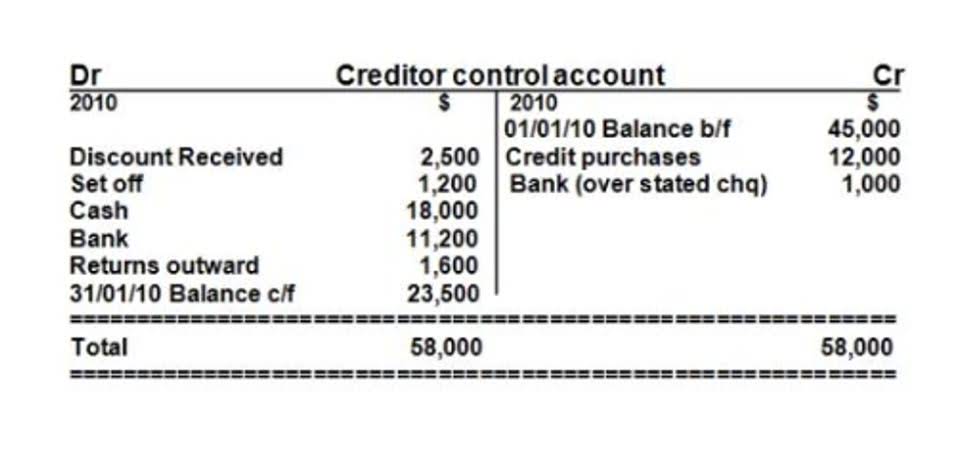
Net present value (NPV) is a technique used in capital budgeting to find out whether a project will add value or not. It involves finding future cash flows of an option and discounting them to find their present worth and comparing it to the initial outlay required. It can be calculated if we can determine the depreciation rate and the useful life. For tax purposes, the depreciation is calculated in unearned revenue the US by assuming the scrap value as zero. Master the fundamentals of financial accounting with our Accounting for Financial Analysts Course. This comprehensive program offers over 16 hours of expert-led video tutorials, guiding you through the preparation and analysis of income statements, balance sheets, and cash flow statements.
- Starting from the original cost of purchase, we must deduct the product of the annual depreciation expense and the number of years.
- Hence, a car with even a couple of miles driven on it tends to lose a significant percentage of its initial value the moment it becomes a “used” car.
- Salvage value, often referred to as residual value or scrap value, is the estimated amount an asset will be worth at the end of its useful life.
- If a business overestimates salvage value, it may record less depreciation than necessary, affecting financial statements.
- Say you own a chocolate business that bought an industrial refrigerator to store all of your sweet treats.
- A salvage value is defined as the theoretical price a person could acquire, or “salvage”, for a depreciation asset that they have.
- The total accumulated depreciation refers to the asset’s depreciable amount once all the depreciation expenses have been put down on the books.
An investor can deduct that expense, that investment, in full amount, from the revenue in the year that investment has occurred. In order to determine After-Tax Cash Flow, we need to determine the taxable income and deduct the tax from Before-Tax Cash Flow. Discover how the FCFE equation is crucial for valuation, helping investors understand a company’s true financial health and potential. Anne Wiegand is a seasoned writer with a passion for sharing insightful commentary on the world of finance. Industry benchmarks and standards provide reference points for estimating salvage value.

It can significantly affect the expected return on investment by providing a clearer picture of potential future cash flows. Investors and managers consider salvage value to assess whether an acquisition will yield profitability or if a different investment might offer better returns. An accurate estimation of salvage value, alongside liabilities assessment, is pivotal in determining the true equity generated from transactions. Salvage value is also called scrap value and gives us the annual depreciation expense of a specific asset. It must be noted that the cost of the asset is recorded on the company’s balance sheet whereas the virtual accountant depreciation amount is recorded in the income statement. With the straight-line depreciation method, a property’s cost recovery is spread out evenly over its useful life.